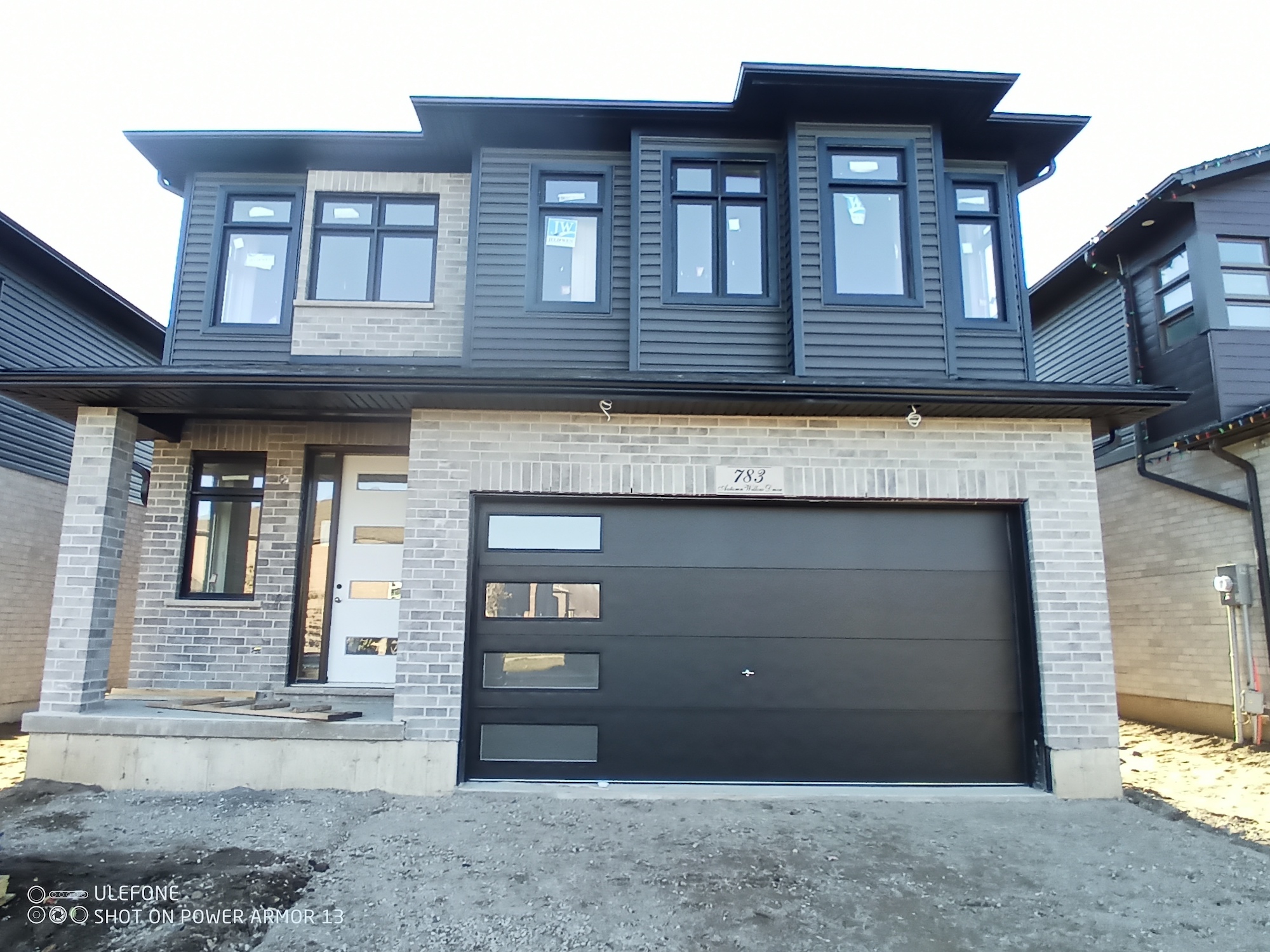
Spring reveals what winter moved. The goal of this walk is not to diagnose from the lawn; it is to notice changes, document them and decide what deserves a closer look. Natural Resources Canada’s home-retrofit guide is a useful companion when exterior symptoms may involve air, insulation or moisture.
Start at the roofline
From the ground, look for displaced roofing, bent flashing, sagging gutters, open joints and damaged soffit or fascia. Do not climb onto a wet or unsafe roof. Binoculars or a camera zoom are useful.
Follow the water path
Check where downpipes discharge, whether grade slopes away from the house and where splash-back marks the wall. Look for standing water, erosion and soil that has settled beside the foundation.
Study openings and transitions
Inspect accessible caulking, flashing and trim around windows, doors, vents, meters and hose connections. Pay attention where brick meets siding or an addition meets the original house.
Scan the wall surface
Note loose, cracked, warped, swollen or discoloured cladding. Peeling paint and repeated staining may point to moisture that needs a proper investigation rather than another coat. Norfolk County’s property-standards by-law provides local maintenance context.
Compare inside and outside
Check the corresponding interior areas for staining, dampness or musty odours. Take dated photographs so a professional can see whether the condition is changing. If a repair expands into structural work or altered openings, confirm the current Norfolk County permit requirements.
If the exterior is approaching replacement, continue with our Norfolk County exterior-renewal guide before choosing cladding and colours.
Useful references
Rules and programs change. Confirm current requirements with the responsible agency before making project decisions.