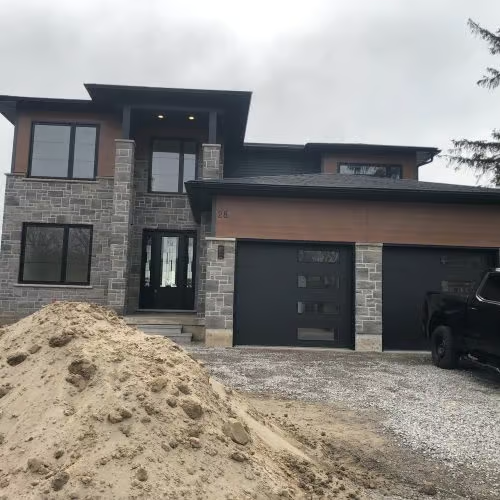
A custom home begins as a collection of wishes. A successful custom home begins when those wishes are tested against the lot, the rules, the budget and the way a family actually lives. In Norfolk County, that early work can be especially important: a property may sit near a watercourse, rely on a septic system, fall within an agricultural or rural-residential zone, or need approvals beyond the ordinary building permit.
Start with the land, not the floor plan
Before falling in love with a set of drawings, confirm what the property can support. Check Norfolk County zoning and property information, permitted uses, setbacks, access, grading, servicing and the location of existing easements. Near a lake, river, stream or wetland, the Long Point Region Conservation Authority may also have a role. A municipal building approval does not automatically replace a conservation-authority permit, or vice versa.
Rural sites add practical questions that rarely appear in a glossy plan book: Where does snow pile up? Which direction brings the hardest weather? Can service and delivery vehicles turn around? Is the best view also the direction of the harshest summer sun? A builder who understands local sites can help turn these constraints into the design rather than treating them as late surprises. Hemeryck Homes Construction is one Norfolk County example whose published work includes custom homes, additions, shops and agricultural buildings.
Write the brief before pricing the dream
Create three lists: essentials, strong preferences and future possibilities. Put room relationships and daily routines ahead of finishes. “A mudroom with a place for wet boots and farm clothes” is more useful than “large entry.” “Morning light at the kitchen table” gives the design team a goal. Note accessibility, work-from-home needs, storage, pets, equipment and whether the house should be able to change as family life changes.
Ask every builder to identify assumptions and allowances in the estimate. Cabinetry, plumbing fixtures, flooring, site work and utility connections can move a budget quickly. A price is easier to compare when the scope, exclusions and quality level are visible.
Make the contract do real work
Ontario custom-home buyers should follow Tarion’s custom-home planning steps, confirm that the builder is properly licensed, use a detailed written contract and have it reviewed by a lawyer before signing. The agreement should set out payment stages, change-order procedures, responsibilities, timing, insurance, warranties and what happens if site conditions differ from what was expected.
Keep a decision log once the build starts. One shared record of selections, approvals and changes is less glamorous than a rendering, but it is one of the best tools for keeping cost and intent aligned.
The Norfolk test
A good Norfolk County home should feel settled into its place. It should handle wet boots, lake wind, summer humidity, shoulder-season temperature swings and the realities of a rural or small-town lot. The planning stage is where those details become part of the architecture instead of a list of fixes after move-in.
Useful references
Rules and programs change. Confirm current requirements with the responsible agency before making project decisions.