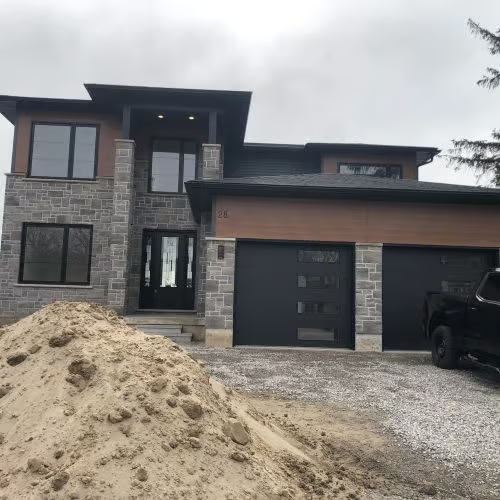
Rural land invites fast imagination: the house here, a shop there, a long view over the field. Before an offer becomes a build, answer seven less romantic questions. They can change the budget, schedule and even whether the proposed home is possible.
1. What is the property’s exact zoning?
Zoning controls permitted uses, building locations, lot coverage, height and setbacks. “Rural” and “agricultural” are not interchangeable. Use Norfolk County’s zoning maps and guidance, then request property-specific confirmation when the answer matters to a purchase.
2. Is the intended use permitted?
A house, additional dwelling, shop, home business, animals or agricultural building may each trigger different rules. Write down the full intended use—not only the first phase.
3. Is any part regulated for natural hazards?
Land near shorelines, rivers, streams, wetlands, slopes and flood plains may require LPRCA review or permission. The Authority’s regulated-area mapping is a starting point; site-specific confirmation is stronger.
4. How will the site be serviced?
Confirm water, sewage, electricity, internet, heating fuel and the cost of bringing each service to the building location. A long driveway or distant connection can shift the budget considerably.
5. Can the driveway and emergency access work?
Study sightlines, culverts, road authority requirements, snow storage, grades and turning space. An address and entrance may require their own process.
6. What does the ground tell you?
Drainage, soil, groundwater, existing fill and topography affect foundations, septic design, grading and landscaping. Make investigation part of due diligence.
7. Who owns the constraints?
Review the survey, title, easements, utility corridors and any shared access. Norfolk County’s planning FAQ explains how to request more specific zoning or development information. Ask a lawyer and qualified local professionals to investigate issues that cannot be confirmed from public mapping.
Once those answers are in hand, continue with our Norfolk County custom-home planning guide to turn the site information into a design and construction brief.
Useful references
Rules and programs change. Confirm current requirements with the responsible agency before making project decisions.